
Frequently Asked Questions About Solar Motion Sensor Wall Lights
How long do solar wall lights take to charge and run?
Solar outdoor wall lights require approximately 6-8 hours of direct daylight exposure on their High efficient Poly-silicon Solar Panel to reach a complete charge. Once fully charged, the internal 3.7V/2200mAH Battery provides illumination for 8-10 hours overnight. For additional details regarding battery performance and placement tips, refer to the main guide. Those figures describe a good day in clear conditions, and real results move around them. A stretch of overcast weather, a shorter winter day, or a panel that sits in shade for part of the afternoon all shorten the following night's run time, while a full summer day of direct sun gives the longest performance. Mode choice matters too: a motion-triggered setting that stays idle most of the night stretches stored power much further than a continuous glow.
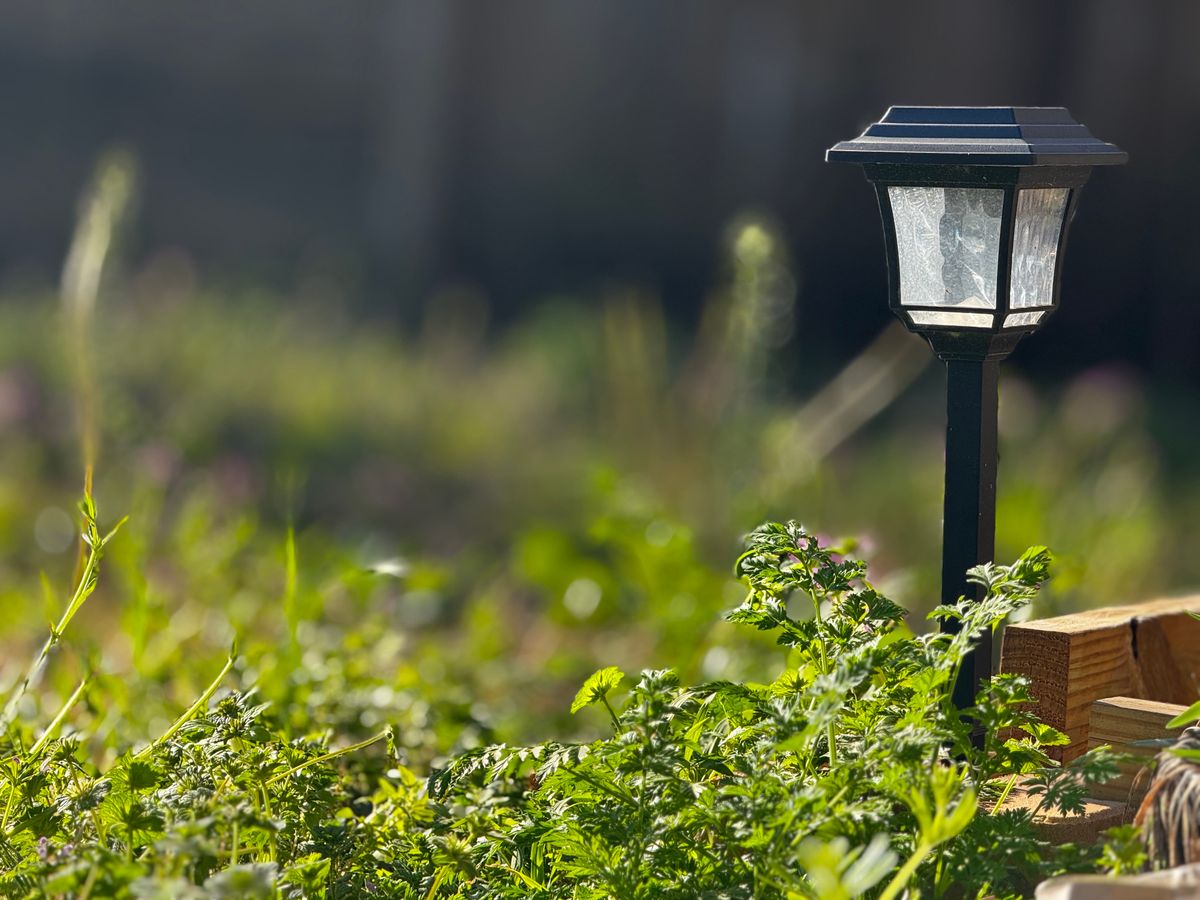
Photo by Amy k on Pexels
New fixtures deserve one full daylight cycle before being judged. A light installed in the afternoon has only banked an hour or two of charge, so a brief first evening is expected rather than a sign of a problem.
What is the detection range of the motion sensor?
The integrated Passive Infrared sensor features an induction range reaching up to a 19FT Induction distance. When motion is detected within this range, the light adjusts according to the selected setting among the 3 Lighting Modes with Motion Sensor capabilities. That figure describes the outer edge of the field under favorable conditions rather than a hard boundary. Detection is strongest for movement crossing the sensor's view and weaker for movement heading straight at it, and a warm body stands out more against cold night air than against a hot summer evening, so practical reach varies with weather and approach angle.
Aim matters more than range. Pointing the sensor along a walkway or toward a gate catches people on the way in, while pointing it at the street invites triggers from passing traffic. Swaying branches and warm air vents can also read as motion, and a small change of angle usually settles it.
How weather-resistant are these solar wall lights?
These fixtures feature a Waterproof IP65 & Heatproof construction, protecting internal electronic circuits from heavy rain, splashing water, heat exposure, and dust accumulation. The durable Black finish housing is designed for outdoor year-round use on walls, patios, decks, and garage perimeters. In practice, that rating covers the conditions a wall fixture actually meets: driving rain, wind-blown spray, sprinklers, snow resting against the housing, and long summer heat on a sun-facing wall. It protects against water falling and splashing on the unit, not against submersion, so a fixture should never be mounted where runoff or standing water can collect around it.
Two habits help it last. Mount the housing flat against the surface so water runs off rather than sitting behind it, and clear snow or leaf litter off the panel when it builds up, since a covered panel cannot charge even in bright weather.
What mounting hardware is required for installation?
Installation requires no electrical hardwiring. Each light features a lightweight frame (12-16 oz) and attaches to exterior surfaces using the included Screws and wall anchors. Mounting can be completed on wood, masonry, siding, or brick walls. A drill, a bit suited to the wall material, and a screwdriver cover the job, plus a pencil for marking and a level if the fixtures flank a door. Masonry and stucco need a masonry bit and firm seating of the anchor, while wood and vinyl take the screws directly. Tighten until the housing is snug and stop there, since forcing a screw into a light frame can distort it and open a gap at the seal.
Height is a judgment call rather than a fixed rule. Higher mounting covers a tighter area near the wall, lower mounting reaches farther along a path, and a firm tug on the finished fixture confirms the anchors will hold in wind.
What type of light bulb base do these fixtures use?
The fixtures feature a standard E26/E27 Light bulb base type, offering compatibility with standard solar replacement bulbs designed for low-voltage direct current systems while maintaining constant battery voltage stability through a Constant 3.7V output.
Read the full guide: Ultimate Guide to Choosing the Best Solar Wall Lights with Motion Sensors
The practical benefit is that the light source stays a serviceable part rather than a disposal decision. Fixtures built around sealed light sources reach the end of their life when the light does, while a common base means the bulb comes out and a replacement goes in with the housing, panel, and sensor untouched.
Replacements do need to suit a low-voltage direct current fixture running from a stored charge, so a household mains bulb is not a substitute even though the base looks familiar. Matching the original type keeps run time and brightness where they were designed to be.