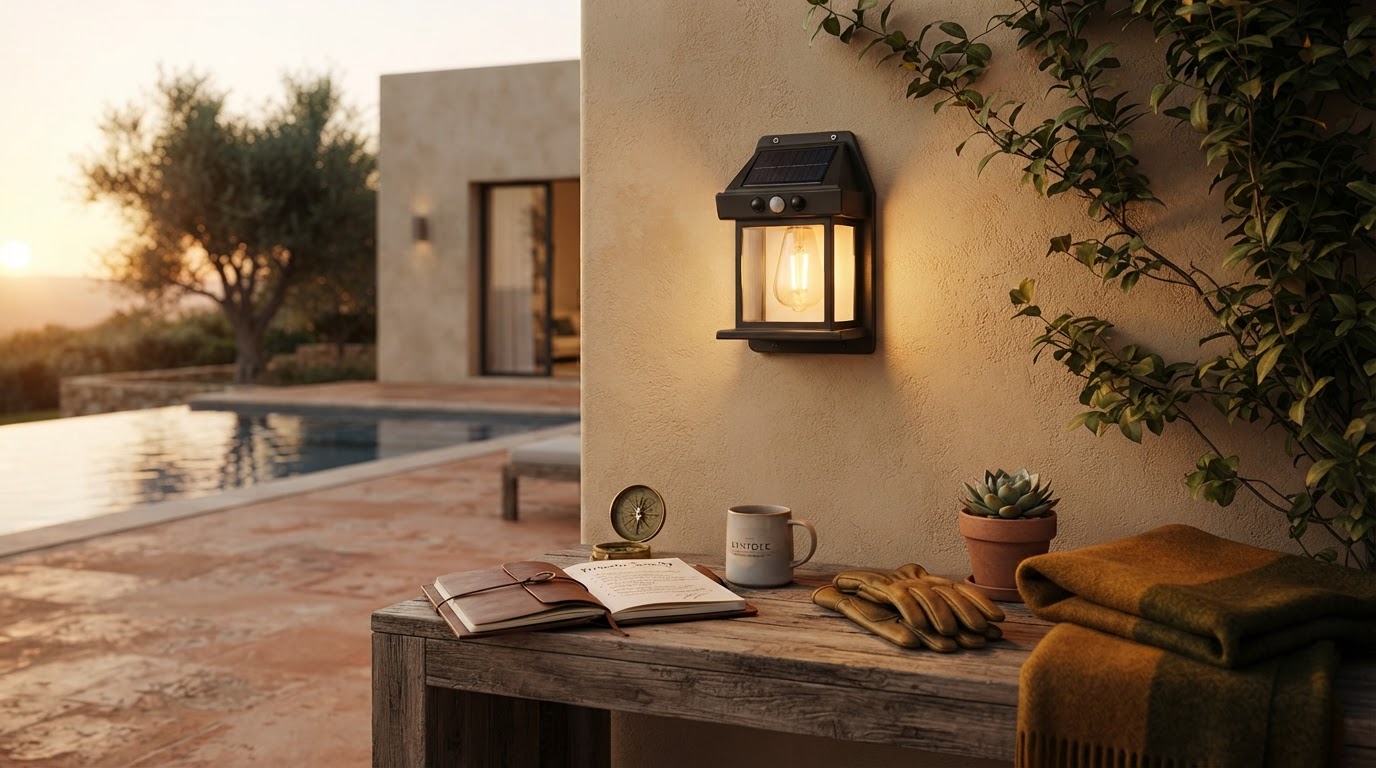
Optimizing Security with Solar Outdoor Wall Lights
 Priya RamanSenior Analyst
November 1, 2026. This analysis examines the technical integration of passive infrared sensors within solar-powered fixtures to improve residential perimeter safety. It is intended for homeowners seeking to balance energy independence with reliable security lighting.
Selecting the right equipment requires a systematic approach to environmental variables and hardware capabilities. Think of it as a matrix of detection range, lumen output, and battery resilience. When these three factors align, the system provides autonomous protection without the infrastructure costs of traditional hardwiring. Two axes matter here: the physical placement relative to solar gain and the specific trigger sensitivity required for the property layout.
The Challenge of Perimeter Visibility and Sensor Latency
Traditional outdoor lighting often fails to address the specific needs of modern residential security because it relies on constant power draw or manual operation. Homeowners frequently encounter the limitation of high-energy costs when maintaining dusk-to-dawn illumination, yet switching to standard motion sensors can lead to "dark zones" if the sensor latency is too high. According to Forbes Vetted, the best motion-sensor outdoor solar lights, such as the Nipify Solar Motion Sensor Spot Lights, must utilize reliable PIR (Passive Infrared) sensors that can activate instantly to be truly effective for path illumination and security.
Without a dedicated power line, the primary problem is ensuring the fixture has enough stored energy to handle frequent activations throughout the night. A solar motion sensor wall light outdoor must manage its battery discharge cycles carefully. If a sensor is too sensitive, it may trigger on swaying branches or small animals, exhausting the battery before the peak hours of the night. Conversely, a sensor with a narrow field of view might miss an intruder approaching from an angle. This technical tension creates a need for fixtures that offer adjustable modes—ranging from dim standby states to high-intensity bursts—to ensure the light is available when a human presence is actually detected. Effectively managing these motion sensor solar wall lights requires understanding the specific detection arc of the PIR sensor, which typically ranges from 15 to 50 feet depending on the model quality.
Technical Integration of Solar Outdoor Wall Lights
Solar Outdoor Wall Lights address these challenges by decoupling the light source from the electrical grid, allowing for strategic placement in areas where wiring is cost-prohibitive. The core of these systems is the photovoltaic panel, which must be positioned to receive optimal solar radiation during the day to power the LED array and sensor logic at night. For areas like entryways, wireless outdoor wall lighting for porch applications provides a streamlined installation process that avoids the aesthetic and structural compromises of conduit.
Modern fixtures utilize high-efficiency LEDs, often reaching up to 1,000 lumens, which is sufficient for identifying faces or obstacles from a significant distance. The integration of lithium-ion or lithium-phosphate batteries allows these lights to maintain a charge for 8 to 12 hours. Advanced units, such as those featured in the Solar Us Shop catalog, often include a separate solar panel connected by a cable, allowing the light to be placed in a shaded area while the panel remains in direct sunlight. This flexibility is crucial for north-facing walls or covered patios where a single-body unit would fail to charge. By employing motion sensor solar wall lights, users can set the system to a 'Dim Light Sensor Mode,' which provides a low-level ambient glow for navigation that ramps up to full brightness upon detection, maximizing both safety and battery longevity.
A Decision Framework for Solar Security Implementation
Once you see it this way, the selection process becomes a matter of matching the fixture’s technical profile to the specific geography of your home. The decision rule: prioritize lumen count for high-traffic entry points and prioritize sensor range for peripheral fence lines or driveways. To ensure the system remains operational throughout the winter months, the IP (Ingress Protection) rating should be a primary consideration, with IP65 being the standard for resisting rain, snow, and heat.
When evaluating a potential installation, follow this technical checklist:
- Assess the solar window: Ensure the installation site receives at least 6 hours of unobstructed sunlight for maximum battery performance.
- Define the detection arc: Match the PIR sensor range (typically 120 to 180 degrees) to the width of the approach path.
- Select the appropriate mode: Use 'Constant Light' for aesthetic accenting and 'Sensor Mode' for high-security areas.
- Verify the IP rating: Look for waterproof and frost-resistant housings to prevent internal circuitry corrosion.
- Plan for pack density: In larger areas where a single light has a limited coverage area, install multiple units in a staggered pattern to eliminate shadows.
Shop Solar Outdoor Wall Lights here
Sources
- Outdoor Solar Security Lights - Rechargeable Battery | Solar Us Shop
- Solar Motion Sensor Lights | PIR Solar Powered Motion Detector Lights
- Don't Buy Solar Security Lights Until You See This Test! - YouTube