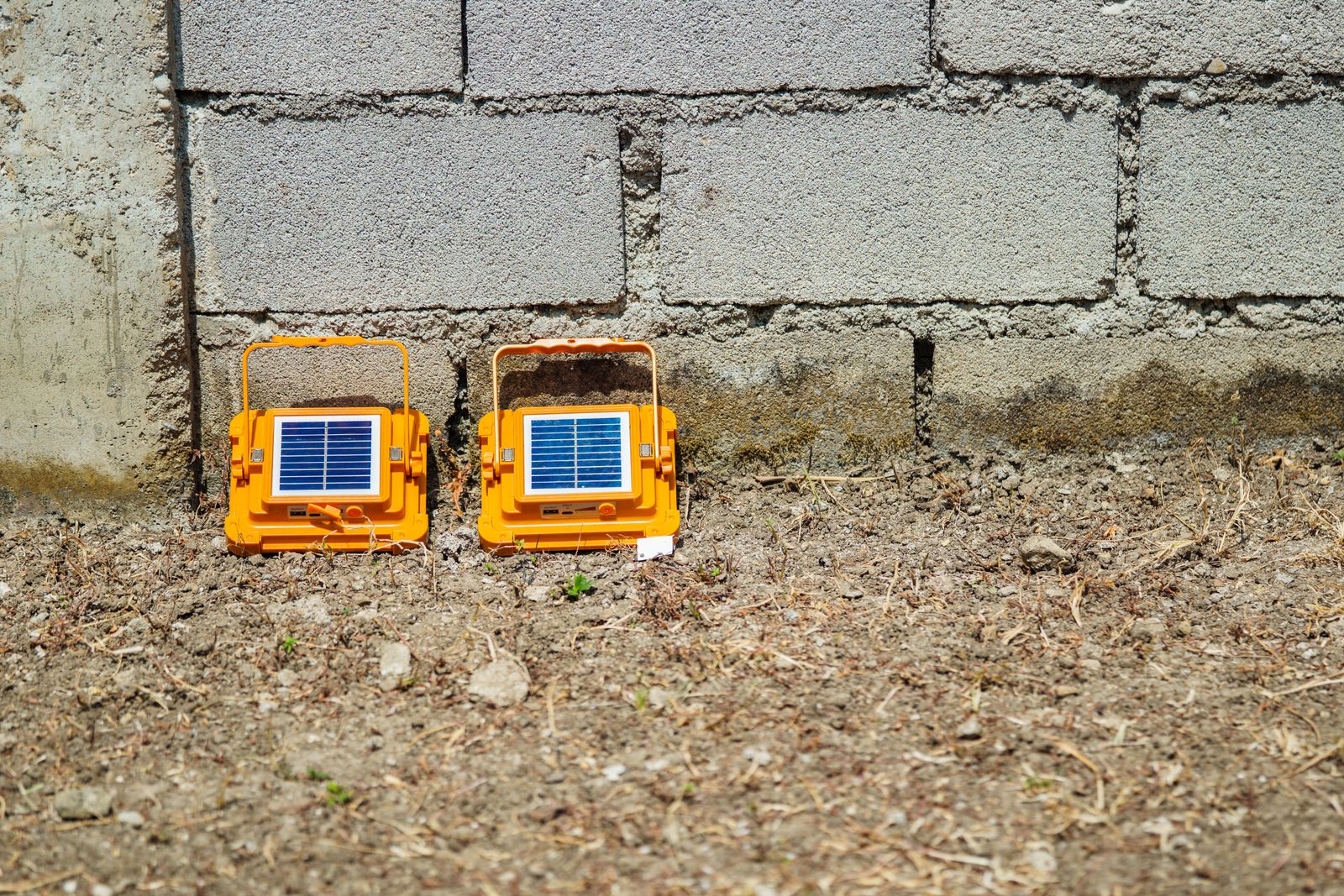
IP65 vs IP44 Solar Outdoor Wall Lights: Waterproof Rating Comparison
Will IP44 solar wall lights survive direct rainfall on an exposed exterior wall, or do you need IP65? Choose IP65-rated solar lights for unroofed outdoor locations exposed to direct rain, driving wind, snow, and garden hose cleaning. IP44 lights are designed only for splashing water and should be reserved for sheltered, covered porches or deep roof overhangs.
IP65 vs IP44 Weather Capability Comparison
| Weather Scenario / Exposure Location | IP44 Rating Capability | IP65 Rating Capability | Recommended Rating |
| --- | --- | --- | --- |
| Direct Torrential Downpour (Unroofed Wall) | High Failure Risk: Water forced past perimeter splash seals under direct vertical pressure. | Fully Protected: Low-pressure water jet resistance prevents intrusion around glass & housing. | IP65 Required |
| Wind-Driven Storm Rain (Gales > 25 mph) | Failed: Water spray driven upward past unsealed lower vent gaps. | Passed: Dust-tight Gasket Seals resist multi-angle water pressure. | IP65 Required |
| Heavy Snow Accumulation & Thaw Cycles | Moderate Risk: Meltwater pools inside seal crevices and expands during freezing. | Fully Protected: Seamless silicone seals prevent meltwater intrusion into battery bay. | IP65 Required |
| Garden Hose Cleaning / Low-Pressure Wash | Failed: Water under tap pressure (30–50 PSI) bypasses splash guard. | Passed: Hydrophobic silicone housing handles direct hose spraying. | IP65 Required |
| Covered Porch / Deep Soffit Overhang (> 12 inches) | Fully Capable: Shielded from direct vertical drop and wind vectors. | Exceeds Needs: Performs flawlessly with extended lifespan reserve. | IP44 Acceptable / IP65 Preferred |
The table below compares how IP44 and IP65 enclosure ratings withstand specific outdoor weather conditions and maintenance scenarios.
Failure Modes & Tradeoffs: IP44 Splash Seals vs IP65 Water-Jet Enclosures
Photo by ROMAN ODINTSOV on Pexels
Pros
- IP65 fixtures utilize continuous internal silicone gaskets around the battery and PCB compartments, eliminating water seepage.
- IP65 rating provides 100% dust tightness (Digit 6), preventing fine dirt and pollen build-up that leads to internal overheating.
- IP65 lights withstand low-pressure garden hose spraying, making routine cleaning of poly-silicon solar panels quick and safe.
- High-grade weatherproofing preserves lithium-ion battery contacts (3.7V/2200mAH) against moisture-induced oxidation.
- IP44 fixtures rely on basic overlap lip joints that degrade rapidly under intense solar UV exposure, cracking within 12–18 months.
- IP44 rating permits micro-dust ingress (Digit 4), which accumulates on motion sensor lenses and reduces PIR detection distance.
- Wind-driven rain easily penetrates IP44 housing vents, causing instant micro-shorting on standard E26/E27 light bulb contacts.
- Freeze-thaw cycles trap moisture inside IP44 seal gaps, causing plastic housing expansion and permanent frame cracking.
Pro Insight: How Seals Degrade Over Time in Unshielded Outdoor Settings
Outdoor weatherproofing isn't static. Over 24 to 36 months, thermal expansion and ultraviolet radiation degrade rubber housing gaskets. In cheaper IP44 light assemblies, foam gaskets dry out and shrink, creating microscopic air pockets. When wind-driven rain hits an exterior wall, water capillary action draws moisture right past these dried seals directly into the control circuit.
To maximize fixture lifespan, select IP65 lights manufactured with compression-molded silicone gaskets rather than flat foam strips. Silicone maintains flexibility from -20°F to 140°F, ensuring seal integrity through severe freeze-thaw cycles and blazing summer heatwaves.
Visual Breakdown: Decoding Ingress Protection (IP) Digits
This diagram illustrates the structural differences between IP44 splash protection and IP65 low-pressure jet protection for outdoor lighting.
Actionable Next Steps for Outdoor Lighting Upgrades
Your decision: Evaluate whether your installation locations have overhead roof protection or full weather exposure.
Do this next: Select IP65-rated solar outdoor wall light 4-packs to guarantee complete weatherproofing on all unroofed exterior walls, garage perimeters, and deck boundaries.
- Read next: Winter Storm Maintenance Guide
- Read next: Complete All-Weather Buying Guide
4 Pack Solar Outdoor Wall Lights featuring IP65 Waterproofing, High-Efficiency Poly-Silicon Panels, and 3 Motion Sensor Modes.
Follow these steps to assess your mounting location before ordering replacement lights.
Key Takeaways: IP Rating Selection Summary
- IP44 Protection Level: Protected against solid objects > 1mm and splashing water from any direction. Suitable only for covered porches, soffits, and sheltered entryways.
- IP65 Protection Level: Completely dust-tight (6) and protected against low-pressure water jets (5) from any angle. Necessary for exposed exterior walls, garages, decks, and pathways.
- Failure Risk on Uncovered Walls: IP44 lights installed on open walls suffer high failure rates due to wind-driven rain penetrating ventilation slits and wire entry points.
- Maintenance Benefit: IP65 fixtures can be sprayed directly with a garden hose to clear dust, pollen, and debris off the poly-silicon solar panel without risking internal damage.
- Long-Term Value: Investing in IP65-rated 4-packs avoids premature battery replacement and housing corrosion caused by seasonal freeze-thaw cycles.
Technical Spec Matrix: IEC 60529 Ingress Protection Testing Standards
| Specification / Test Parameter | IP44 Testing Protocol | IP65 Testing Protocol | Engineering Impact on Fixture |
| --- | --- | --- | --- |
| Solid Object Ingress (1st Digit) | Tested against wires/tools > 1.0 mm. No protection against fine dust. | Dust-Tight: Vacuum applied inside enclosure; 0 dust ingress over 8 hours. | IP65 prevents internal dust build-up on motion sensors & electronics. |
| Water Volume & Flow Rate (2nd Digit) | 10 Liters per Minute (L/min) via oscillating splash tube. | 12.5 Liters per Minute (L/min) via 6.3 mm calibrated water nozzle. | IP65 withstands 25% higher water volume delivered under focused velocity. |
| Water Pressure & Distance | Splashing water at 80–100 kPa from 0.2 to 0.5 meters. | Water jet stream at 30 kPa nozzle pressure from 2.5 to 3.0 meters. | IP65 resists directional pressure from wind-blown rain and garden hoses. |
| Test Duration & Angles | 5 minutes of spray covering ±180 degrees vertical. | At least 3 minutes of continuous direct jet spray from all angles. | IP65 guarantees multi-directional seal integrity during prolonged storms. |
| Internal Enclosure Vacuum | No pressure differential applied during test. | Negative internal pressure applied to pull moisture through seals. | IP65 proves zero leakage even when atmospheric pressure shifts rapidly. |
The International Electrotechnical Commission (IEC 60529) standard establishes strict laboratory testing conditions for IP ratings. Here is how IP44 and IP65 compare under laboratory conditions.
Decision Guide: Matching Ingress Ratings to Mounting Locations
Photo by Alan Kabeš on Pexels
Choose IP65 solar wall lights for any mounting location directly exposed to rain, snow accumulation, wind, or hose cleaning. Reserve IP44 lights strictly for covered porches and deep overhangs.
Best choice for
- IP65 Rated Solar Outdoor Wall Lights — Complete dust sealing and water jet resistance ensure uninterrupted dusk-to-dawn operation during heavy rainstorms.
- IP65 Rated Solar Outdoor Wall Lights — Protects motion sensor housing and 3.7V/2200mAH battery against direct vertical downpours and side-sweeping wind.
- IP44 Rated Solar Wall Lights — Sheltered location blocks direct water paths, making basic splash protection sufficient.
- Do not install IP44 lights on south- or west-facing exterior walls subject to heavy wind-driven rain storms.
- Do not attempt to wash IP44 lights with a garden hose nozzle or pressure spray.
- Do not place IP44 lights where roof runoff drips directly onto the solar panel or light fixture housing.
- IP67 Commercial Submersible Fixtures — Only necessary if fixtures are installed in low-lying ground locations prone to standing puddle immersion.
Top Recommendation: All-Weather IP65 4-Pack Solar Outdoor Wall Lights
For comprehensive security and accent lighting across unroofed exterior spaces, this 4-pack solar wall light setup combines IP65 weatherproofing with versatile functionality.
Real-World Weather Scenarios: Where IP44 Fails and IP65 Thrives
Late-Summer Severe Thunderstorm with 40 MPH Gusts — IP65 Required. High wind velocities force rainwater upward against fixture bases. IP44 lights feature unsealed lower weep holes that allow wind-driven water into the circuitry, causing short circuits. IP65 fixtures use baffled internal drain channels and silicone compression rings that exclude driven moisture.
Winter Freeze-Thaw and Snow Ice Accumulation — IP65 Recommended. Snow collecting on top of wall lights melts into water during daylight, then freezes at night. Water expanding inside IP44 housing joints splits outer casings. IP65 silicone seals flex under pressure, maintaining a tight barrier against meltwater intrusion.
Routine Spring Cleaning & House Washing — IP65 Required. Poly-silicon solar panels collect pollen, bird droppings, and dust, reducing charging efficiency by up to 30%. Cleaning an IP44 fixture with a garden hose forces water past its splash gaskets. IP65 lights allow safe, quick rinsing with low-pressure hose nozzles.
Dusty Rural or Coastal High-Humidity Environments — IP65 Required. Fine sand and salt fog penetrate IP44 enclosures, corroding battery contacts and coating PIR motion sensor lenses. IP65's dust-tight rating (Digit 6) keeps salt air and dust out of internal compartments.
Laboratory tests provide benchmark numbers, but practical performance depends on how fixtures respond to real exterior conditions.
Selecting outdoor wall lighting requires looking beyond basic lumen ratings and solar panel dimensions. The primary factor determining long-term reliability on an exterior wall is Ingress Protection (IP)—the international standard for detailing mechanical enclosure resistance against solids and moisture.
Deciphering the Digits: Solids vs. Liquids
An IP rating consists of two numbers (e.g., IP65):Structural Sealing: Why IP65 Handles Unroofed Walls
The key construction difference between IP44 and IP65 fixtures lies in structural joint design. An IP44 light housing typically relies on overlapping plastic rims and plastic snap tabs. While this prevents rain falling straight down from hitting internal components, wind gusts push water sideways or upward into the light body.In contrast, an IP65-rated solar outdoor wall light incorporates continuous silicone rubber gaskets around all critical seams, including:
- The poly-silicon solar panel perimeter frame.
- The PIR motion sensor lens housing.
- The battery access door and power switch toggle boot.
- The glass or polycarbonate light diffuser cover.
Solar Panel Efficiency and Cleanliness
Solar lighting performance relies heavily on sunlight absorption. The high-efficiency poly-silicon panel on an outdoor light must absorb sun rays for 6 to 8 hours to deliver 8 to 10 hours of nighttime illumination. However, airborne dirt and pollen reduce solar cell output over time.Because IP65 units resist low-pressure water jets, homeowners can clean the solar panel surface by spraying it directly with a standard garden hose. Cleaning an IP44 light with a hose risks forcing water past its splash seals, leading to circuit board corrosion or premature battery failure.
Related Weatherproof Solar Lighting Resources
- What IP65 Waterproof Means for Solar Outdoor Wall Lights
- What Does IP65 Waterproof Really Mean for Outdoor Solar Wall Lights?
- What are the brightest Solar Outdoor Wall Lights?
Frequently Asked Questions: IP Ratings for Outdoor Solar Lights
Answers to common questions about ingress protection ratings, winter performance, and cleaning procedures for outdoor solar wall lights.
Final Decision Checklist: Ready to Upgrade Your Outdoor Perimeter?
Your decision: Choose IP65-rated solar wall light packs for all unroofed exterior spaces subject to direct weather.
Do this next: Order the 4-Pack IP65 Solar Outdoor Wall Lights featuring poly-silicon solar panels, 3 motion sensor modes, and dusk-to-dawn performance.
Related resource: Visit solaroutdoorwalllights.com to explore all-weather wireless lighting packages.
4 Pack Solar Outdoor Wall Lights — Available at solaroutdoorwalllights.com
Ensure long-lasting, maintenance-free lighting across your walls, patio, and garage by matching your environmental exposure with the right IP rating.
Cover photo by Nothing Ahead on Pexels.