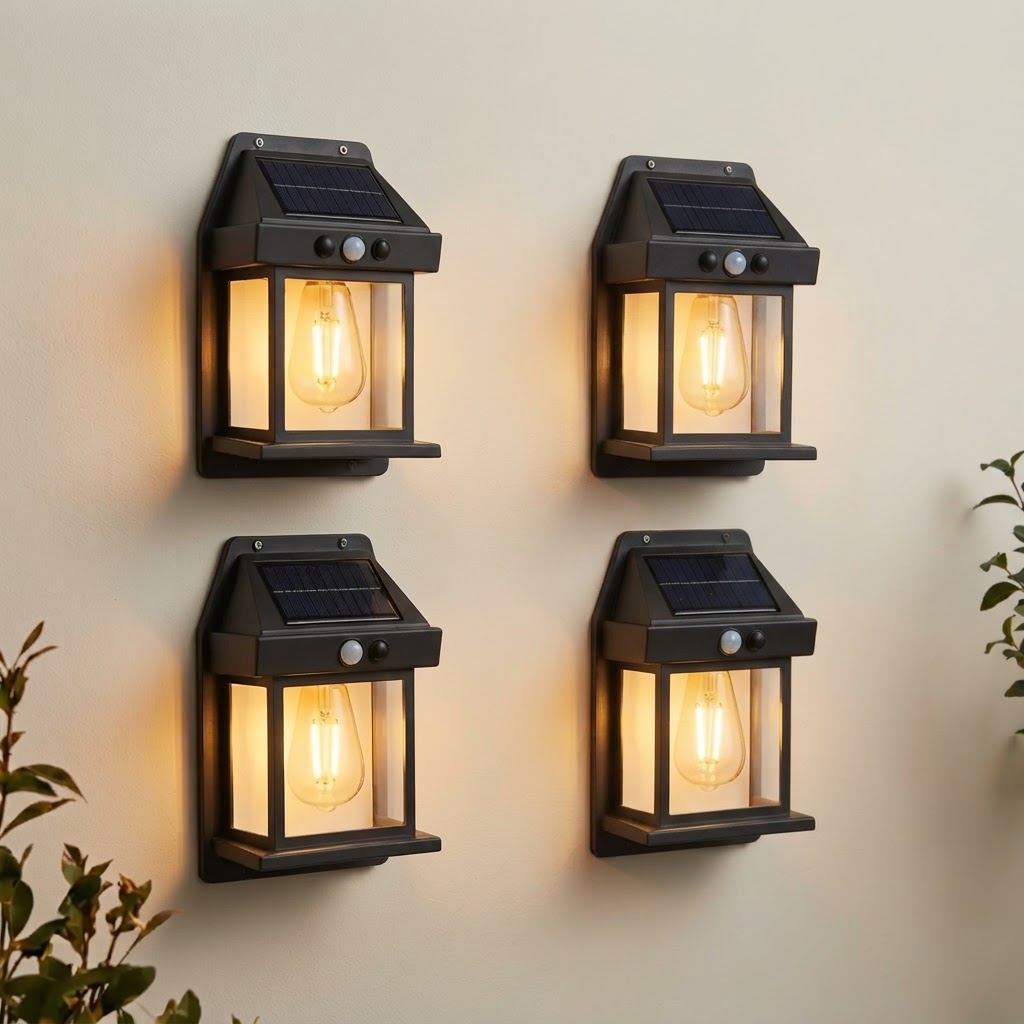
Poly-Silicon vs. Monocrystalline Solar Panels for Outdoor Wall Lights
Evaluating Solar Panel Types for Wall Lighting
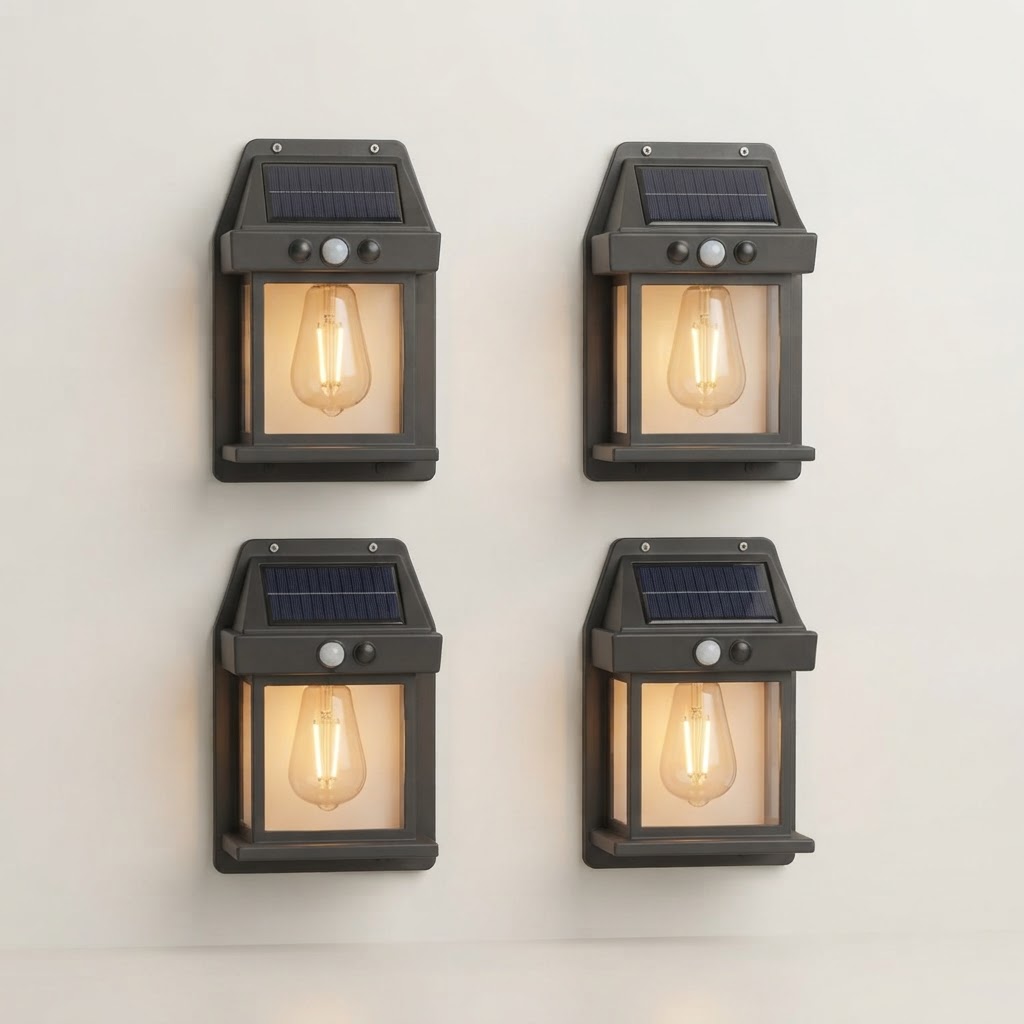
When comparing residential exterior solar fixtures, panel technology is a primary factor influencing performance and long-term value. Consumers frequently evaluate Poly-silicon panels against Monocrystalline solar panels. Detailed insights into comprehensive outdoor setup strategies can be reviewed in the main guide.
Both photovoltaic panel types convert solar energy into direct current electricity to charge internal batteries, but they differ in silicon purity, conversion efficiency rates, manufacturing cost, and expected service lifespan. The comparison matters less for a wall light than it does for a rooftop array, and the reason is scale. A rooftop system is trying to power a house, so every point of efficiency changes how much electricity it produces. A wall fixture only has to gather enough energy in a day to run one light through the night, and past that point extra efficiency has nowhere to go.
That reframes the question usefully. Instead of asking which panel technology is better in the abstract, the practical question is whether a given fixture reliably fills its battery on a normal day in its actual mounting spot. Shade, panel angle, and surface cleanliness change that answer far more than the choice of silicon does.
Conversion Efficiency and Solar Energy Capture
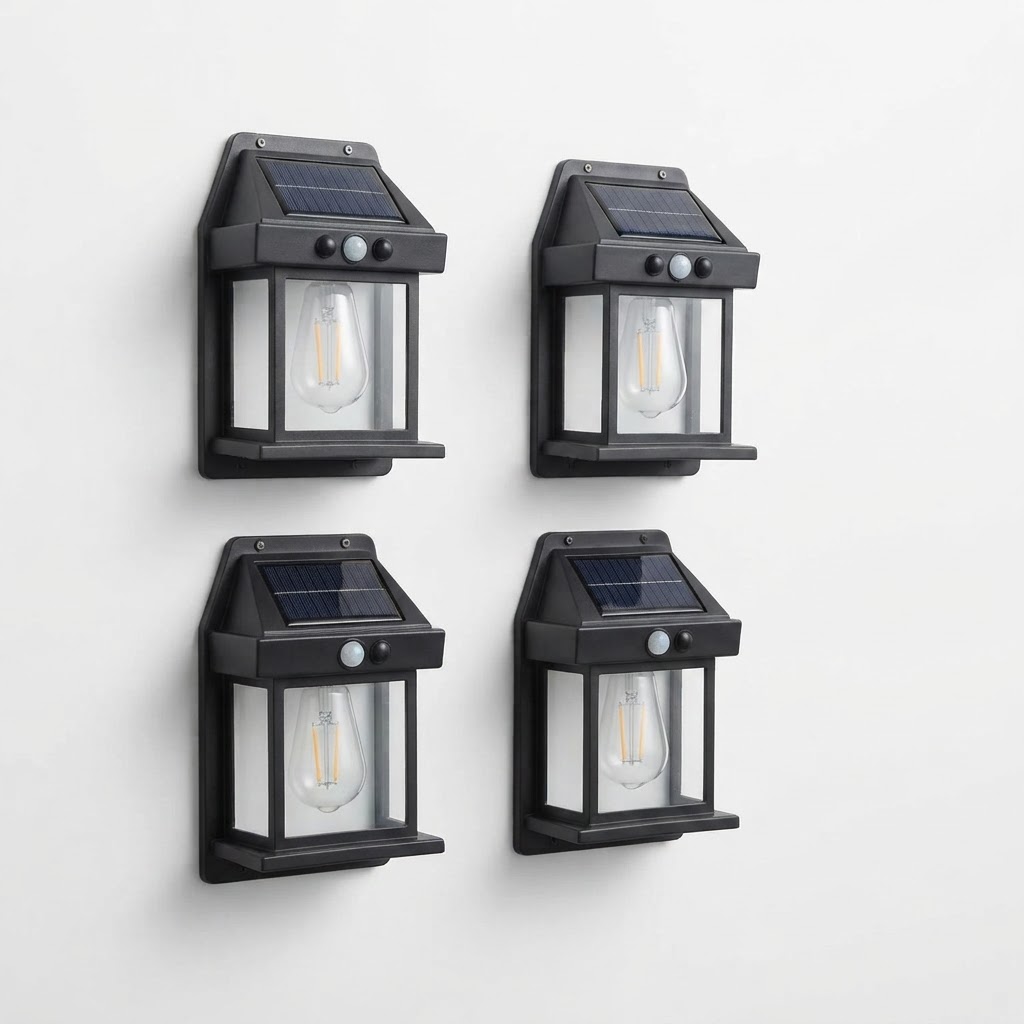
Poly-silicon solar panels are manufactured from melted raw silicon poured into square molds. This process creates a characteristic multi-crystalline cell structure. These panels achieve a solar conversion efficiency of 17-20%, which provides sufficient energy collection capacity to fully charge a 3.7V/2200mAH Battery within 6-8 hours of direct sunlight.
Monocrystalline panels, cut from single-crystal silicon ingots, offer slightly higher efficiency ranges (typically 20-23%). However, for compact fixtures designed for local wall lighting, 17-20% efficiency provides reliable daily energy harvesting at a significantly lower consumer price point. Placement usually outweighs the efficiency gap in daily use. A panel of either type facing a shaded wall collects less than a lower-efficiency panel in full sun, and the difference is not subtle, since a few hours of afternoon shadow costs more charge than the spread between the two technologies. Dust, pollen, and water spots work the same way, filtering light before it reaches the cells.
The two types also behave a little differently in weak light. Higher-purity cells tend to hold up slightly better under overcast skies, which is worth weighing in a consistently cloudy region, but for a fixture that needs a set number of daylight hours rather than maximum output, either type meets the requirement when it is mounted somewhere sunny.
Panel Lifespan and Long-Term Durability
Service life varies between panel technologies under outdoor environmental exposure:
- Poly-Silicon Panel Lifespan: Offers a predictable panel lifespan range of 3-5 years under normal UV exposure.
- Monocrystalline Panel Lifespan: Can reach a lifespan of 5-10 years before notable efficiency degradation occurs.
Panels are also rarely the first thing to age on an outdoor fixture. Weather exposure, mounting hardware, and the storage cell usually set the real service life, and a sealed housing that keeps moisture away from the electronics protects all three. Keeping the panel clean, clearing snow and leaves, and trimming growth that shades it does more for longevity than the panel type.
Value Proposition and Overall System Match
For exterior wall illumination, poly-silicon fixtures present an outstanding cost-to-performance balance. A multi-fixture configuration, such as a 4 Pack set priced at a pack price of $39.99, enables property owners to illuminate multiple zones affordably without sacrificing key features like Dusk-to-Dawn automatic performance and 19FT motion detection.
Read the full guide: Ultimate Guide to Choosing the Best Solar Wall Lights with Motion Sensors
There is a coverage argument that pure specifications miss. Exterior lighting works as a set of zones, typically a front door, a garage side, a path, and a patio, and a single high-specification fixture leaves most of them dark. For the same outlay, several capable fixtures light the whole perimeter, which is the outcome most homes are actually after.
The features that shape daily experience are shared across both panel types anyway. Automatic switch-on at dusk, motion detection covering the approach, selectable modes, and a weather-sealed housing decide whether the lights are useful, while panel technology mainly decides how quickly the battery fills on a sunny afternoon.