Choose solar wall lights by lux, not lumens, and winter sun hours
 Priya RamanSenior Analyst
Most solar outdoor wall lights fail the same way: not because the LED is weak, but because the buyer matched a 1,000-lumen claim to a wall and ignored the 2.5 to 4.5 peak-sun-hour reality of winter. I use a different framework: decide the lux you need on the ground, then work backward through motion timing, battery capacity, panel placement, and weather rating.
That sounds fussy until you install two identical-looking fixtures on different walls. A south-facing garage light can feel reliable all winter; the same unit on a shaded north wall can dim by 8 p.m. The product did not change. The energy budget did.
Below is the decision framework I recommend for choosing solar outdoor wall lights without overbuying brightness or underbuying runtime.
The framework: choose by “use case energy,” not by fixture style
I think about every solar wall light as a small off-grid power system. It has four jobs:
Most shoppers start at step three: “How many lumens?” That is understandable, but incomplete. Lumens measure total light output from the fixture. Lux measures light arriving on a surface. For wall-mounted outdoor lights, lux is often the more useful number because the same 800-lumen light can be comfortable at 6 feet and glary at eye level, or too weak if mounted high and aimed poorly.
The U.S. Department of Energy has repeatedly emphasized that LED performance is system-dependent: optical design, thermal control, driver quality, and installation all affect real output and lifetime. That matters even more for solar fixtures because the battery and panel are part of the lighting system, not accessories.
A simple target: how much light do you actually need?
Photo by Gurgenidze G on Pexels
Here is the field rule I use before comparing products:
- Navigation light: enough to see steps, edges, and obstacles.
- Task light: enough to unlock a door, sort keys, carry groceries, or identify a latch.
- Deterrence light: enough to reveal movement and faces near an entry or side yard.
- Courtesy light: enough to make a patio or pathway feel welcoming without blasting neighbors.
Observed planning numbers I use before recommending a fixture
These are not laboratory ratings. They are practical planning targets from installations and nighttime walk-throughs, cross-checked against outdoor lighting guidance from the Illuminating Engineering Society and dark-sky recommendations that favor appropriate intensity, shielding, and warmer color temperatures.
| Location or job | Practical target at walking/working surface | Typical mounting height | What I look for in a solar wall light | |---|---:|---:|---| | Front door key area | 10–30 lux at lock/handle | 5–7 ft | Wide beam, motion boost, warm or neutral white | | Steps or side path | 3–10 lux on tread/path | 2–6 ft | Downward aim, low-glare lens, dusk-to-dawn low mode | | Driveway edge | 5–15 lux on pavement | 6–9 ft | Wider throw, motion sensor, larger panel | | Gate or trash area | 10–20 lux at latch/bin | 5–8 ft | Motion activation, replaceable battery preferred | | Decorative patio wall | 1–5 lux ambient | 4–7 ft | Warm color, shielded output, lower lumen rating | | Security-sensitive side yard | 10–30 lux in detection zone | 7–10 ft | PIR motion, adjustable sensor, 20–60 sec high mode |
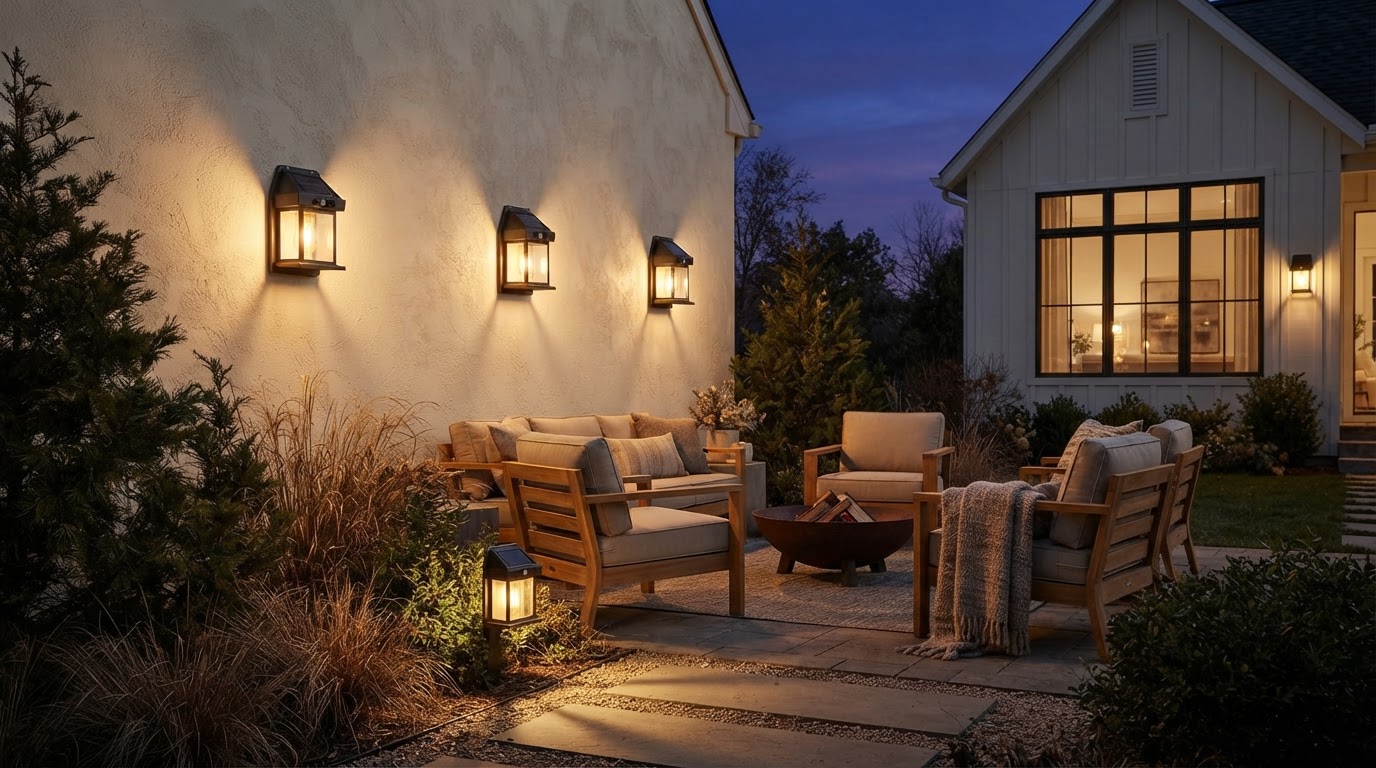
The numbers are intentionally modest. A 2,000-lumen solar wall light may be appropriate on a detached garage or dark driveway, but it is often excessive at a townhouse entry. More output also means more battery drain.
The winter-sun filter: the question that prevents disappointment
Before I compare solar wall lights, I ask one question: How many hours of direct sun will this exact wall-mounted panel receive in December or January?
Not “is the yard sunny?” Not “does the product say it charges in sunlight?” The question is about the panel’s actual exposure during the worst solar month.
The National Renewable Energy Laboratory’s PVWatts tool and solar resource data show why this matters. Depending on location and season, usable solar input can swing dramatically. A site that feels bright in June may have a low winter sun angle, long tree shadows, and short days by December. Even a small shadow across a compact solar panel can reduce charging enough to show up as dimmer light or shorter runtime.
Use this quick winter-sun filter:
- 5+ hours of direct winter sun: most quality solar wall lights are viable.
- 3–5 hours: choose motion-first designs, larger panels, and conservative brightness.
- 1–3 hours: use separate-panel solar lights, lower-output path lighting, or accept shorter winter runtime.
- Less than 1 hour: solar may still work as an occasional motion light, but hardwired low-voltage lighting is usually more reliable.
My take: motion lights are usually more honest than dusk-to-dawn lights
My take: for solar outdoor wall lights, a motion-activated fixture with a low standby mode is usually a better product than a bright dusk-to-dawn fixture.
That sounds counterintuitive because dusk-to-dawn lighting feels like the premium promise. But it forces a small battery to spend energy for 10 to 14 hours during long winter nights. A motion-based light spends most of the night sipping power, then uses high output when someone is actually present.
If your goal is safety, wayfinding, and deterrence, high light at the moment of use is often more valuable than medium light all night. This is also friendlier to neighbors and wildlife. The International Dark-Sky Association and IES Five Principles for Responsible Outdoor Lighting recommend light that is useful, targeted, low-level, controlled, and warm-colored. Motion-controlled solar lighting fits that philosophy when aimed well.
There are exceptions. If you need continuous illumination for a public walkway, a business entrance, or an elder-care path where someone may be out at any time, choose a fixture specifically built for dusk-to-dawn use and give it a strong solar exposure. But for most residential walls, motion-first is the better energy design.
The battery math buyers rarely do
Solar wall light listings often publish lumens and charging time, but not usable battery watt-hours. When they do provide battery details, you can estimate whether the runtime claim is realistic.
The basic relationship is:
Watt-hours = battery voltage × amp-hours
A common lithium-ion cell might be listed as 3.7 V and 2,200 mAh. That is:
3.7 × 2.2 = 8.14 watt-hours
If the LED system draws 2 watts on a medium mode, theoretical runtime is about 4 hours before losses. Real runtime is lower because of driver losses, cold weather, battery aging, and the system’s low-voltage cutoff. If the same light only draws 0.2 watts in standby and jumps to 5 watts for motion events, it can last far longer through the night.
This is why I look for product language that separates:
- low mode runtime,
- high mode runtime,
- motion duration,
- battery capacity,
- solar panel wattage,
- and whether the battery is replaceable.
Weather ratings: IP65 is not a magic spell
For outdoor wall lights, I want a published ingress protection rating, commonly IP44, IP54, IP65, or IP66. The IEC 60529 standard defines the IP code: the first digit relates to solids/dust protection, the second to water ingress protection. In plain language, IP65 generally means dust-tight and protected against water jets. That is a strong baseline for exposed exterior walls.
But IP ratings do not tell you everything. They do not guarantee long-term UV resistance, battery quality, corrosion resistance, or performance after years of heat cycling. I still check for:
- gasketed seams,
- stainless or coated fasteners,
- drain-friendly mounting orientation,
- panel lens material,
- and whether water can pool on the top edge.
Color temperature: brightness is not the same as visibility
Many solar wall lights are sold in cool white because it looks bright in listing photos. Cool white can be useful for security zones, but it is not automatically better. Around doors, patios, and neighbor-facing walls, warmer light often produces less perceived glare and a calmer look.
The dark-sky guidance I trust generally favors warmer color temperatures, commonly 3000K or lower when practical. For homes, I usually recommend:
- 2700K–3000K: patios, porches, entries, decorative walls.
- 3000K–4000K: driveways, gates, trash areas, utility zones.
- 4000K+ cautiously: security-focused areas where glare and neighbor spill are controlled.
Placement beats product specs
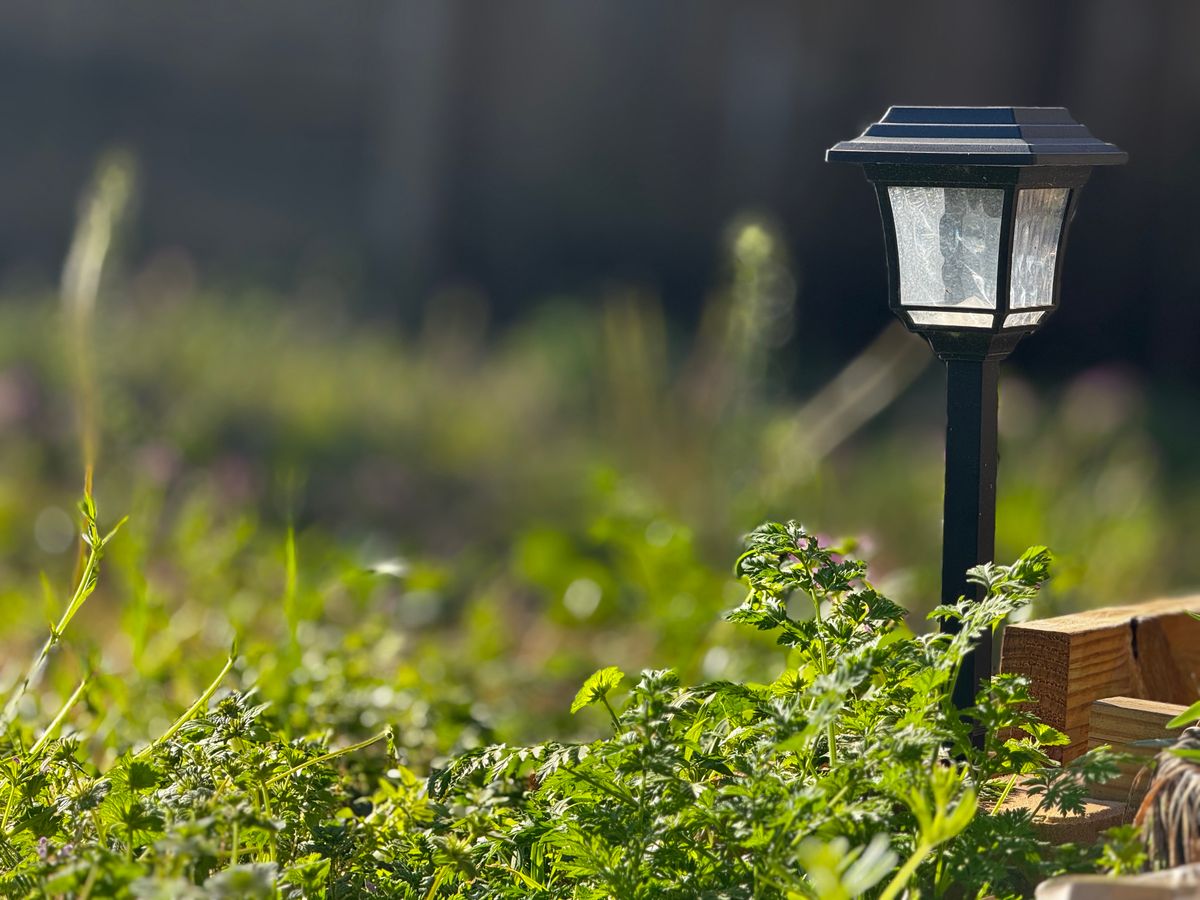
A mediocre solar wall light placed well can outperform a premium one placed badly. Here is my placement checklist.
Before drilling holes
After installation
- Charge the fixture fully before judging performance.
- Test it after two cloudy days, not only after one sunny day.
- Walk the approach route from multiple angles.
- Reduce high-mode duration if the area gets frequent animal or pedestrian triggers.
- Clean the panel seasonally; more often in dusty, pollen-heavy, or coastal locations.
How I would choose by scenario
Front porch with decent sun
Choose a warm or neutral solar wall light with low-mode dusk-to-dawn and motion boost. You do not need extreme lumens. You need comfortable key-level visibility and reliable triggering near the door.
Dark side yard with no wiring
Choose a motion-first light with a larger solar panel, preferably adjustable or separate from the fixture. Mount higher than eye level and aim down the path. Avoid decorative low-output sconces if the real need is security and footing.
Backyard patio wall
Choose lower output, warmer color, and a shielded beam. The goal is atmosphere and safe movement, not floodlighting. A too-bright solar light can make the patio less pleasant.
Garage or driveway edge
Choose a wider beam, higher output, and strong motion detection. If the garage face gets good sun, all-in-one units can work well. If the eave shades the wall, use a separate-panel design.
Shaded entry
Do not force an all-in-one solar light to do a hardwired job. If direct sun is below 1–2 hours in winter, pick a remote-panel model or consider low-voltage wired lighting.
The buying checklist I actually trust
When comparing solar outdoor wall lights, I would rather see clear specifications than giant lumen claims. Use this checklist:
- Use case: navigation, task, security, or decorative?
- Winter sun: estimated direct winter sun on the panel: 1, 3, or 5+ hours?
- Mode: motion-only, low-plus-motion, or dusk-to-dawn?
- Brightness: appropriate lux target, not just headline lumens.
- Battery: published capacity in mAh or watt-hours.
- Panel: large enough and positioned for actual sun exposure.
- Weather rating: IP65 or better for exposed walls; check construction details too.
- Color temperature: warm for living areas, neutral for utility areas.
- Sensor control: adjustable duration/range is a plus.
- Maintenance: cleanable panel, accessible mounting, replaceable battery if available.
FAQ
Are higher-lumen solar wall lights always safer?
No. Higher lumens can improve visibility in a driveway or side yard, but they can also create glare, harsh contrast, and shorter runtime. Safety comes from putting enough light on the right surface. For a front door, 10–30 lux at the lock area is usually more useful than a blinding beam pointed outward.
What IP rating should I choose for outdoor wall lights?
For exposed exterior walls, I generally look for IP65 or IP66. IP44 may be acceptable under a covered porch, but wind-driven rain and dust are tougher on fixtures than many buyers expect. The IEC IP code is a water and solids ingress system, not a full durability guarantee, so also check housing seams, screws, and drainage.
Why does my solar wall light work in summer but not winter?
Winter reduces the energy budget in three ways: shorter days, lower sun angle, and longer nights. Trees and rooflines also cast longer shadows. A battery that easily supports summer operation may not fully recharge in December. Motion-first modes and remote solar panels help in marginal locations.
Is warm white or cool white better for solar outdoor wall lights?
Warm white, around 2700K–3000K, is usually better for porches, patios, and neighbor-facing walls because it feels less harsh. Neutral white can be useful for gates, driveways, and utility areas. Cool white may look brighter, but it is not automatically more effective and can increase glare if poorly aimed.
Sources
- NREL PVWatts Calculator and solar resource data
- U.S. Department of Energy Solid-State Lighting resources
- IEC 60529 Ingress Protection code overview
- DarkSky and IES Five Principles for Responsible Outdoor Lighting