How Solar Outdoor Wall Lights Lower Your Monthly Electricity Bill
Replacing four 60-watt hardwired exterior incandescent fixtures with zero-grid-draw solar outdoor wall lights eliminates 876 kWh of cumulative electricity consumption over four years, saving between $140 and $280 on utility bills. Off-grid poly-silicon solar wall lights powered by 3.7V/2200mAh batteries provide complete financial payback within 6 to 12 months while bypassing $300 to $800 in electrical wiring fees.
Key Energy Savings & Performance Highlights
- Zero Grid Energy Consumption: Solar outdoor wall lights operate completely independent of household AC circuits, consuming 0 kWh from your local electric utility.
- Rapid Payback Period: A standard 4-pack solar wall light setup recovers its entire retail cost in 6 to 12 months when replacing 60W incandescent or continuous hardwired LED fixtures.
- Extended Nightly Runtime: High-efficiency poly-silicon solar panels convert daylight during 6–8 hours of sunlight to yield 8–10 hours of active nightly illumination.
- IP65 Weather Resilience: Sealed, heatproof, and waterproof construction guarantees operation through snow, heavy rain, and extreme summer temperatures.
- Smart Battery Management: Integrated motion sensors offer 19-foot induction distances, dynamically saving battery power for when motion is detected.
Technical & Power Specifications Matrix
| Technical Parameter | Hardware Specification | Operational Impact |
| --- | --- | --- |
| Solar Panel Type | High-Efficiency Poly-silicon | Maximizes photon conversion efficiency even under overcast skies |
| Internal Battery | 3.7V / 2200mAh Lithium-ion | Stores full charge for 8-10 hours of continuous or motion-activated light |
| Charge Time | 6–8 Hours Direct Sunlight | Fully recharges internal cell during standard daylight hours |
| Waterproof Rating | IP65 Sealed Housing | Prevents water ingress, rust, and dust accumulation in outdoor climates |
| Motion Sensor Range | 19 Feet (Induction Angle 120°) | Triggers high illumination upon approach to improve security and save power |
| Bulb Base Type | E26 / E27 Standard Base | Allows standard LED bulb compatibility within low-voltage DC housing |
| Operating Modes | 3 Selectable Lighting Modes | Enables customization between motion sensing, dim standby, and flicker modes |
The table below outlines the core mechanical, solar charging, and electrical specifications for modern solar outdoor wall lights.
Grid Draw vs. Off-Grid Solar Power Flow
Understanding how solar outdoor wall lights isolate your exterior lighting from your utility meter.
Recommended Solution: 4-Pack Solar Outdoor Wall Lights
For homeowners seeking to eliminate utility costs while lighting entryways, pathways, and patios, upgrading to a 4-Pack Solar Outdoor Wall Light system offers the ideal balance of brightness, automatic dusk-to-dawn operation, and rapid financial return.
- Zero Electricity Cost: High-efficiency poly-silicon solar panel absorbs solar energy during daylight.
- All-Weather Durability: Heavy-duty IP65 waterproof and heatproof casing built for harsh winter freeze and summer heat.
- Flexible Lighting: 3 distinct modes, including motion-sensor trigger with a 19-foot detection radius.
- Wireless DIY Mounting: Mounts to brick, wood, siding, or concrete in under 10 minutes without an electrician.
Infographic: Annual Utility Cost Breakdown by US Region
Visual breakdown of regional energy costs and annual savings achieved by replacing traditional exterior lights with solar fixtures.
Interactive Brief: Outdoor Light Electricity Savings Estimator
Calculate your specific home utility bill savings when replacing hardwired exterior bulbs with solar wall lights.
Expert Tip: Maximize Battery Capacity in Winter Months
To maintain reliable 8-to-10-hour illumination during short winter days, switch your solar outdoor wall lights from continuous dusk-to-dawn mode (Mode 3) to Motion Sensor Mode (Mode 1).
In Mode 1, the light remains dark or ultra-dim until movement is sensed within its 19-foot induction field, briefly firing at 100% brightness. This reduces continuous discharge on the 3.7V/2200mAh lithium battery by up to 80%, preserving stored power during periods of limited solar irradiance.
Pre-Installation Planning Steps
Your decision: Determine if your intended exterior wall locations receive 4–6 hours of direct solar exposure daily.
Do this next: Audit existing porch light wattage, calculate grid draw, and select direct sun mounting locations.
- Read next: Solar Wall Lights vs. Hardwired Porch Lights: Energy Costs and ROI Comparison
Select a 4-Pack Solar Outdoor Wall Light kit for complete entry and garage coverage.
Follow this structured process to prepare your exterior walls for zero-cost solar lighting.
Decision Support: Is Solar Right for Your Outdoor Spaces?
Solar outdoor wall lights are ideal for homeowners wanting to lower energy bills, secure dark perimeters, and avoid hardwiring costs in locations with clear solar exposure.
Best choice for
- 4-Pack Poly-silicon Solar Wall Lights — Instantly eliminates 219 kWh of annual utility draw per 4 fixtures without wiring changes.
- Motion-Sensor Solar Wall Lights — Avoids $300-$800 in electrician trenching and wiring expenses.
- The mounting surface sits permanently under deep roof eaves or dense shade receiving under 2 hours of daylight.
- Commercial electrical codes mandate continuous hardwired 120V emergency lighting.
- Hardwired Low-Voltage LED Systems — Best suited for deeply shaded north-facing walls requiring a remote transformer.
Featured High-Efficiency Solar Fixtures
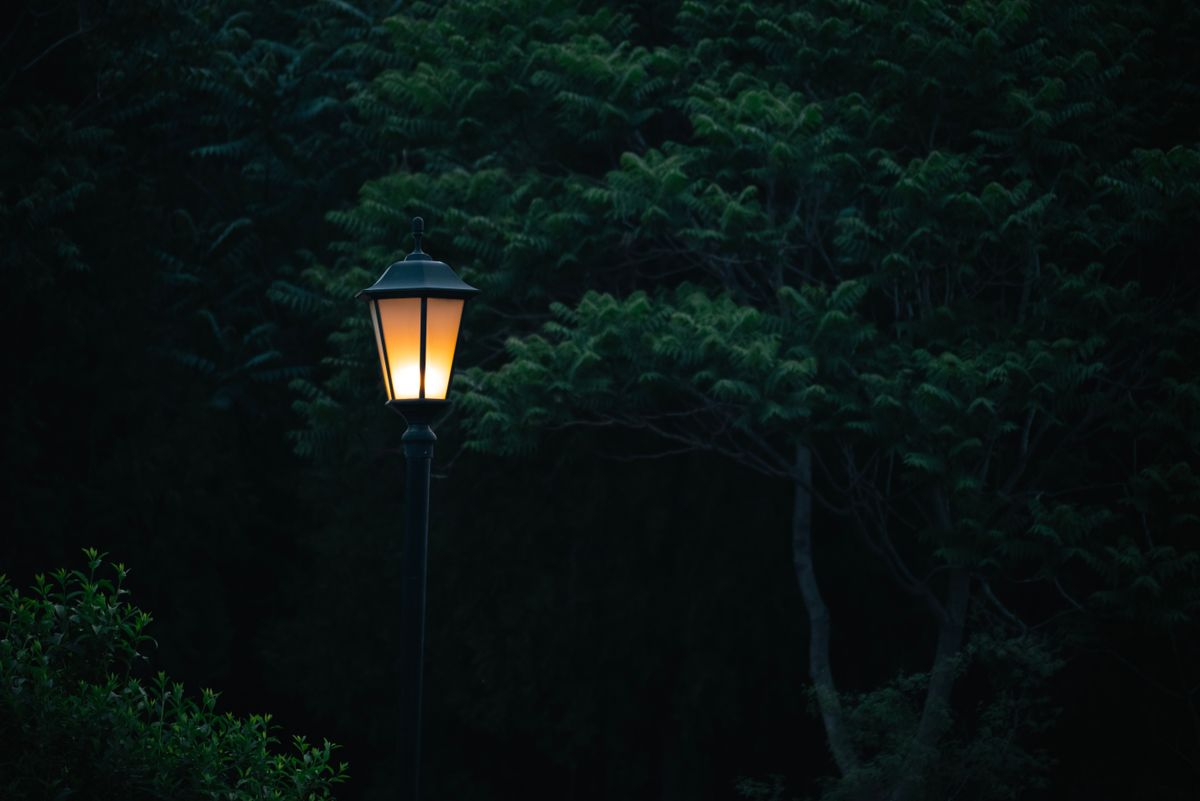
Photo by Star Zhang on Pexels
Explore the specs of our core zero-electricity exterior lighting pack.
Exterior lighting represents one of the largest silent power draws in modern residential homes. Because porch, wall, and walkway lights operate continuously for 8 to 12 hours every night, their cumulative electrical consumption stacks up quickly on monthly electric bills.
The Math Behind Outdoor Lighting Grid Draw
A standard residential setup features four exterior wall lights: two flanking the garage, one at the front entry porch, and one illuminating the back patio. If equipped with standard 60-watt incandescent bulbs operating dusk-to-dawn (average 10 hours nightly):
$$\text{Daily Energy Draw} = 4 \text{ fixtures} \times 60 \text{ Watts} \times 10 \text{ hours} = 2,400 \text{ Watt-hours (2.4 kWh)}$$ $$\text{Annual Energy Consumption} = 2.4 \text{ kWh/day} \times 365 \text{ days} = 876 \text{ kWh}$$
At the current United States national average electricity rate of approximately $0.23 per kilowatt-hour (kWh), running these four hardwired bulbs costs $201.48 per year. In higher-rate states like California, Massachusetts, or Hawaii ($0.32 to $0.45/kWh), annual operating costs exceed $280 to $390 for simple exterior illumination.
Even homeowners who swapped incandescent bulbs for 9-watt LED hardwired fixtures consume approximately 131 kWh annually, paying $30 to $58 per year in grid electricity—while remaining vulnerable to power outages.
How Off-Grid Poly-Silicon Panels Eliminate Utility Draw
Solar outdoor wall lights operate entirely outside the grid loop. Each fixture integrates a high-efficiency poly-silicon solar panel that captures solar photons during peak daylight hours. Through the photovoltaic effect, solar energy charges an internal 3.7V / 2200mAh lithium-ion storage cell.
When ambient light falls below dusk thresholds, the light's internal controller automatically switches power delivery to the energy-efficient LED array. Charging for 6 to 8 hours under direct sunlight yields 8 to 10 hours of active nightly illumination. Because zero current passes through your home's breaker panel, utility draw for these fixtures drops to exactly 0.00 kWh.
Hardwired vs. Solar Wall Light Annual Operating Cost Comparison
| Usage Scenario (4 Exterior Fixtures) | Annual Grid Consumption | Annual Energy Cost | Electrician Install Cost | 5-Year Total Expense |
| --- | --- | --- | --- | --- |
| Scenario A: 60W Incandescent (Hardwired, 10 hrs/night) | 876 kWh | $201.48 | $350 - $600 | $1,357.40 - $1,607.40 |
| Scenario B: 9W Hardwired LED (Hardwired, 10 hrs/night) | 131.4 kWh | $30.22 | $350 - $600 | $501.10 - $751.10 |
| Scenario C: Solar Wall Lights (Off-Grid Poly-silicon) | 0 kWh | $0.00 | $0.00 (DIY) | $0.00 (Beyond Fixture Purchase) |
A side-by-side financial comparison across common outdoor lighting setups based on an average US electric rate of $0.23/kWh.
Common Mistakes That Reduce Solar Light Efficiency
Avoid these structural and operational errors to preserve maximum solar charging speed and battery lifespan:
Related Resources on Outdoor Energy Efficiency
- Solar Outdoor Wall Lights FAQ: Charging, Modes, and Weatherproofing
- What are the best outdoor solar lights for house wall use?
- Solar Outdoor Lighting and Energy Savings: Frequently Asked Questions
Frequently Asked Questions
Find answers to essential questions regarding energy savings, winter performance, and installation of solar wall lights.
Take Action: Upgrade to Zero-Cost Outdoor Lighting
Your decision: Decide whether your outdoor walls receive at least 4 to 6 hours of unshaded daylight daily to support solar solar charging.
Do this next: Audit your existing hardwired exterior bulbs, compute your annual lighting grid draw, and replace high-consumption fixtures with a 4-pack solar wall light system.
- Read next: Solar Wall Lights vs. Hardwired Porch Lights: Energy Costs and ROI Comparison
- Read next: Buyer's Guide to Zero-Electricity Solar Outdoor Wall Lights for Energy-Conscious Homeowners
Upgrade your exterior lighting with our 4-Pack Solar Outdoor Wall Lights featuring high-efficiency poly-silicon solar panels, IP65 waterproofing, and 3 motion-sensing modes.
Ready to eliminate utility charges on your porch and wall lighting? Follow these final steps to upgrade your home.