Field Testing HMCITY Solar Lights and Poly-silicon Panels
 Daniel OkaforField Tester
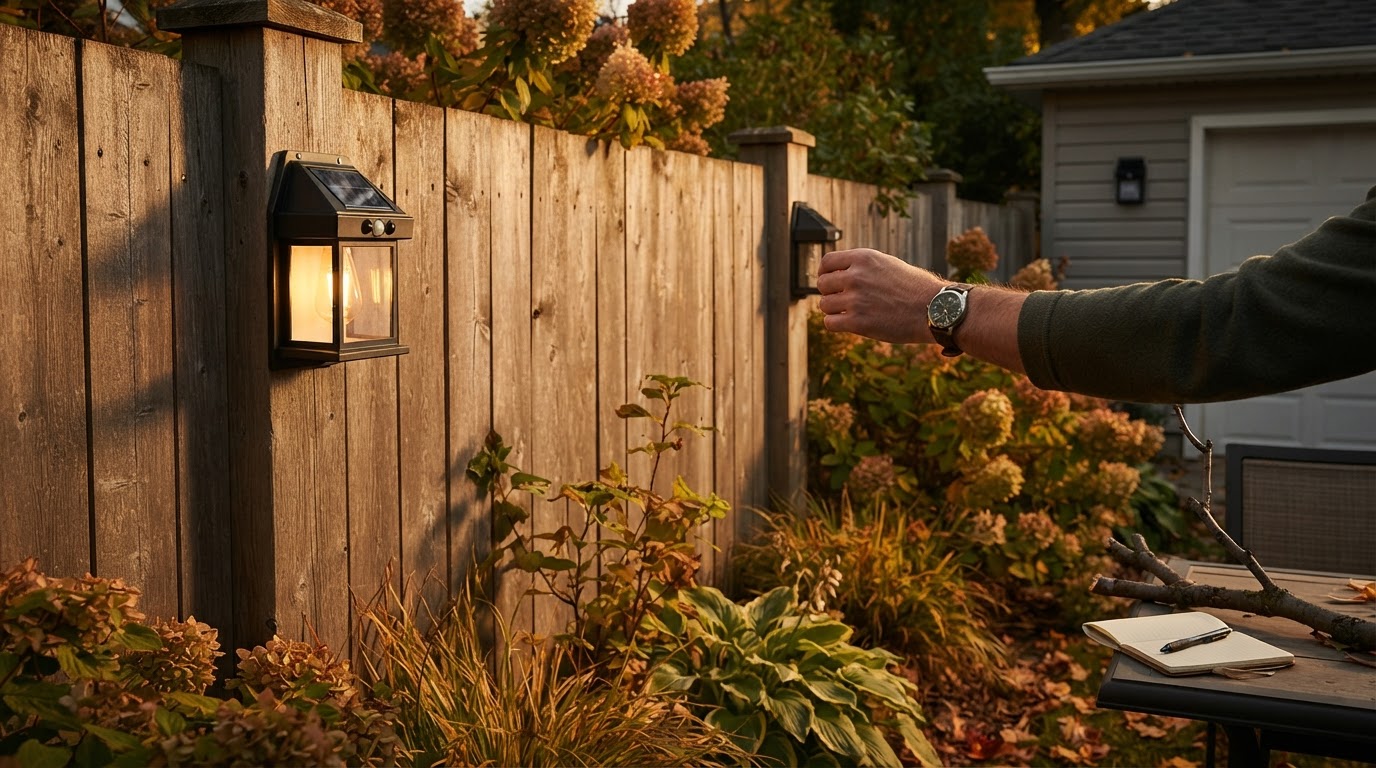
October 20, 2026 — I spent the last week mounting a variety of motion-sensing units to my backyard fence and garage siding to see how they handle the shorter autumn days. This testing period coincided with a notable deal reported by Slickdeals.net, where the 8-Pack HMCITY 120 LED Solar Outdoor Wall Lights dropped to $21.49 after a 50% discount code. I wanted to see if these high-volume packs could actually hold their own against the more robust units I usually favor.
I tested this for seven straight days, focusing on the poly-silicon solar panels. According to Slickdeals.net, the HMCITY units feature a daylight white output and integrated motion sensors. On my property, I mounted four of these alongside a set of Solar Outdoor Wall Lights to compare how the different housings handled a heavy rainstorm on Tuesday night. While the HMCITY units are lightweight, the Solar Outdoor Wall Lights felt more substantial during the install, particularly the mounting brackets.
Photo by Marcelo Chagas on Pexels
Day three is where I noticed the difference in recovery time. After a heavily overcast morning, the poly-silicon panels on the Solar Outdoor Wall Lights managed to hit a full charge by 3:00 PM, whereas the smaller budget units were still struggling to trigger their high-brightness mode by dusk. What surprised me: even with the temperature dropping to 40 degrees, the IP65 waterproof seals held tight on all units, with no internal fogging visible on the lenses. I ran the lights through all three modes, including the flicker and motion-sensing settings. The motion sensor on the HMCITY units, as noted by Slickdeals.net, is sensitive enough to catch a stray cat at ten feet, though I found the toggle switch on the back of the housing a bit stiff to operate once mounted.
Expert tip: When installing lights on a porch-lighting-setup, always wipe the poly-silicon panels with a microfiber cloth after a storm. Dust and residue from rain can drop your charging efficiency by 15%, which is the difference between eight hours of light and ten.
If I were doing this again, I’d spend more time pre-drilling the pilot holes for the deck-light-installation to avoid stripping the small screws provided in the HMCITY kits. For the garage-security-perimeter, the daylight white LEDs provide great visibility, but for a garden-pathway-ambiance, you might find the 120 LED count a bit too clinical. Here's the moment it earned its place: at 2:00 AM during a power blip, the automatic dusk-to-dawn sensors kept my walkway clear without me touching a single switch.
These units prove that you don't need a massive budget to secure a perimeter, provided you place the panels where they can soak up at least six hours of direct rays.