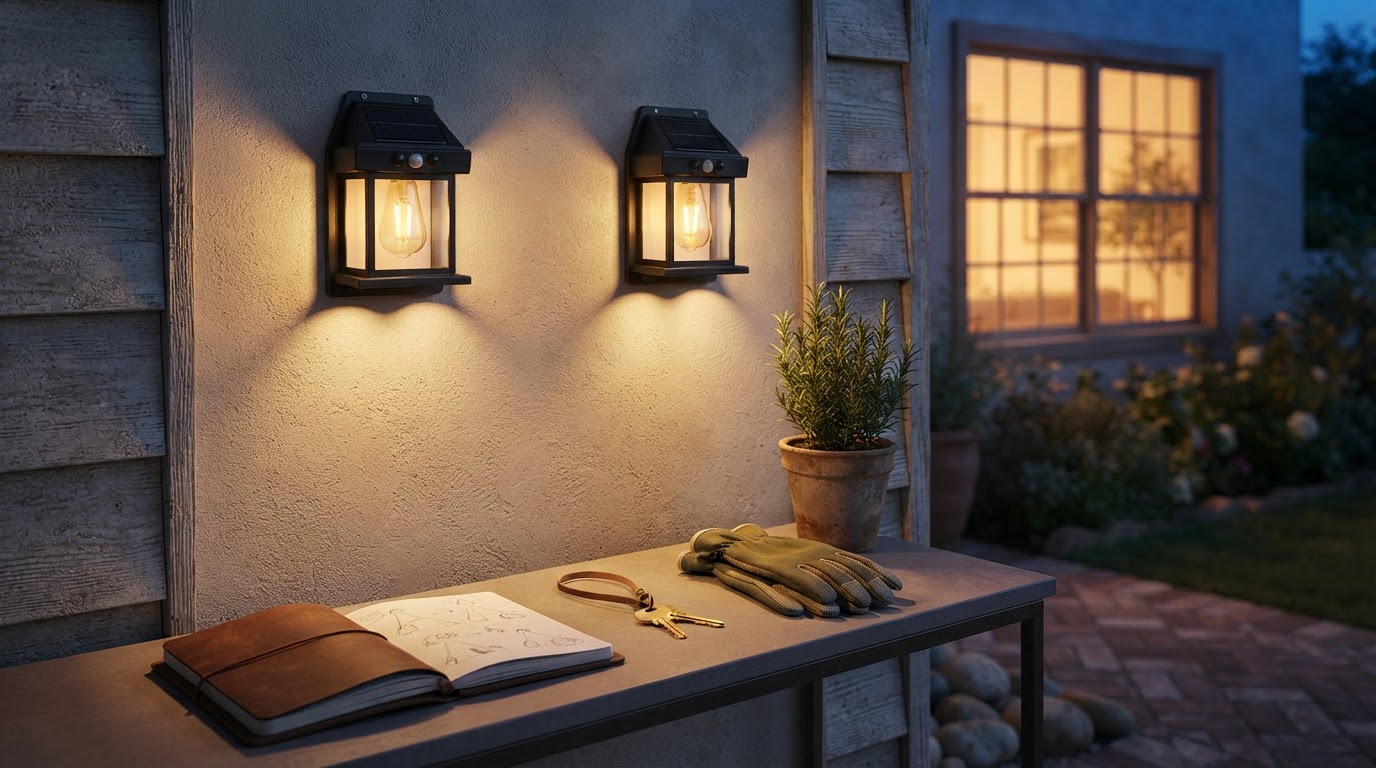
Optimizing Security With Dusk to Dawn Solar Wall Lights
 Sam VasquezBuying Guide Lead
November 16, 2026. This guide examines the technical requirements and practical benefits of automated solar-powered exterior lighting. It is written for homeowners seeking to improve property visibility without the complexity of hardwired electrical installations.
The Problem with Manual Perimeter Lighting
Maintaining a secure perimeter often fails not because of equipment quality, but because of human error or high operating costs. Traditional outdoor lights require manual activation or expensive timers that must be adjusted as seasons change. When lights are left off, properties become targets; when left on 24/7, energy bills climb. For those managing larger properties, the cost of trenching wire to distant points is often prohibitive. According to Superior Lighting, solar-powered LED dusk-to-dawn lights are particularly effective for commercial perimeters and residential yards because they require no wiring, allowing for placement in areas where traditional power is inaccessible.
I have seen many homeowners struggle with dark zones near the garage or along the back fence line. If you are trying to illuminate a specific entryway, a black solar barn light for garage provides a focused downlight that works well for task-oriented visibility. However, for general security, a light that stays off until it detects movement—or stays at a low dim until triggered—is more efficient for battery conservation. Many standard units fail because they use cheap nickel-cadmium batteries that lose capacity in the cold. If you live in a region with harsh winters, skip this if you aren't prepared to clean the panels monthly to ensure they receive a full charge. Without consistent UV exposure, even the best sensors will fail to trigger when you actually need them.
Performance Standards for Solar Outdoor Wall Lights
When evaluating Solar Outdoor Wall Lights, the internal circuitry and LED chip quality dictate the actual utility of the device. Many entry-level units advertised on marketplaces like eBay feature 3-mode motion sensors, which allow the user to choose between a constant dim glow, a motion-only trigger, or a full-brightness dusk-to-dawn cycle. For most residential applications, the 'Dim to Bright' mode is the most practical. It provides enough ambient light to navigate a walkway while saving the bulk of the battery's energy for a high-lumen burst when a person approaches.
Technical reviews of high-output units, such as those featured by product testers on YouTube, show that modern fixtures using 2835 LED chips can deliver approximately 1050 lumens of brightness while consuming only about 8W of power. This efficiency is critical. For instance, if you are installing solar fence lights outdoor, you are likely dealing with multiple units spread across a wide area. You need them to be IP65 waterproof to survive rain and snow without the internal housing fogging up. Between a standard wall sconce and a dedicated motion-sensor flood lamp, I'd go with the motion-sensor version for any area where you aren't actively sitting or entertaining. The sudden transition from dark to 1000+ lumens is a far better deterrent for intruders than a constant, low-level glow. If you're on a budget, look for '2-pack' bundles of solar porch lights that offer multiple modes, as these typically provide the best value-to-lumen ratio for front and back door coverage.
Choosing the Right Fixture for Your Property
Selecting the right hardware depends on your specific layout and lighting goals. I generally categorize these into three buckets: security, navigation, and aesthetics. For security, you want high-lumen output and a wide-angle PIR (passive infrared) sensor. For navigation, such as lighting a path or a fence line, consistency is more important than raw brightness.
Here is what I'd actually buy: for a front porch, I prefer a modern solar wall sconce with a warm white color temperature (around 3000K) to keep the house looking inviting. For a side alley or a shed, I would prioritize a black metal housing with an integrated motion sensor that can withstand heavy weathering.
Before you purchase, use this checklist to verify the hardware:
- Battery Capacity: Ensure the unit has at least a 2000mAh lithium-ion battery to support 8-10 hours of operation.
- Lumen Output: Look for a minimum of 800 lumens for security lights and 100-300 lumens for decorative fence lighting.
- IP Rating: Only buy fixtures rated IP65 or higher to prevent water ingress in the battery compartment.
- Sensor Range: A quality PIR sensor should detect motion at a minimum of 15-20 feet within a 120-degree arc.
- Mounting Hardware: Check that the kit includes stainless steel screws to prevent rust streaks on your siding.
Shop Solar Outdoor Wall Lights here.
Sources
- LED Dusk to Dawn Outdoor Solar Lights - Post or Wall ...
- 25+ Solar Dusk-to-Dawn Outdoor Lighting for sale
- Solar Dusk to Dawn Outdoor Light Product Review