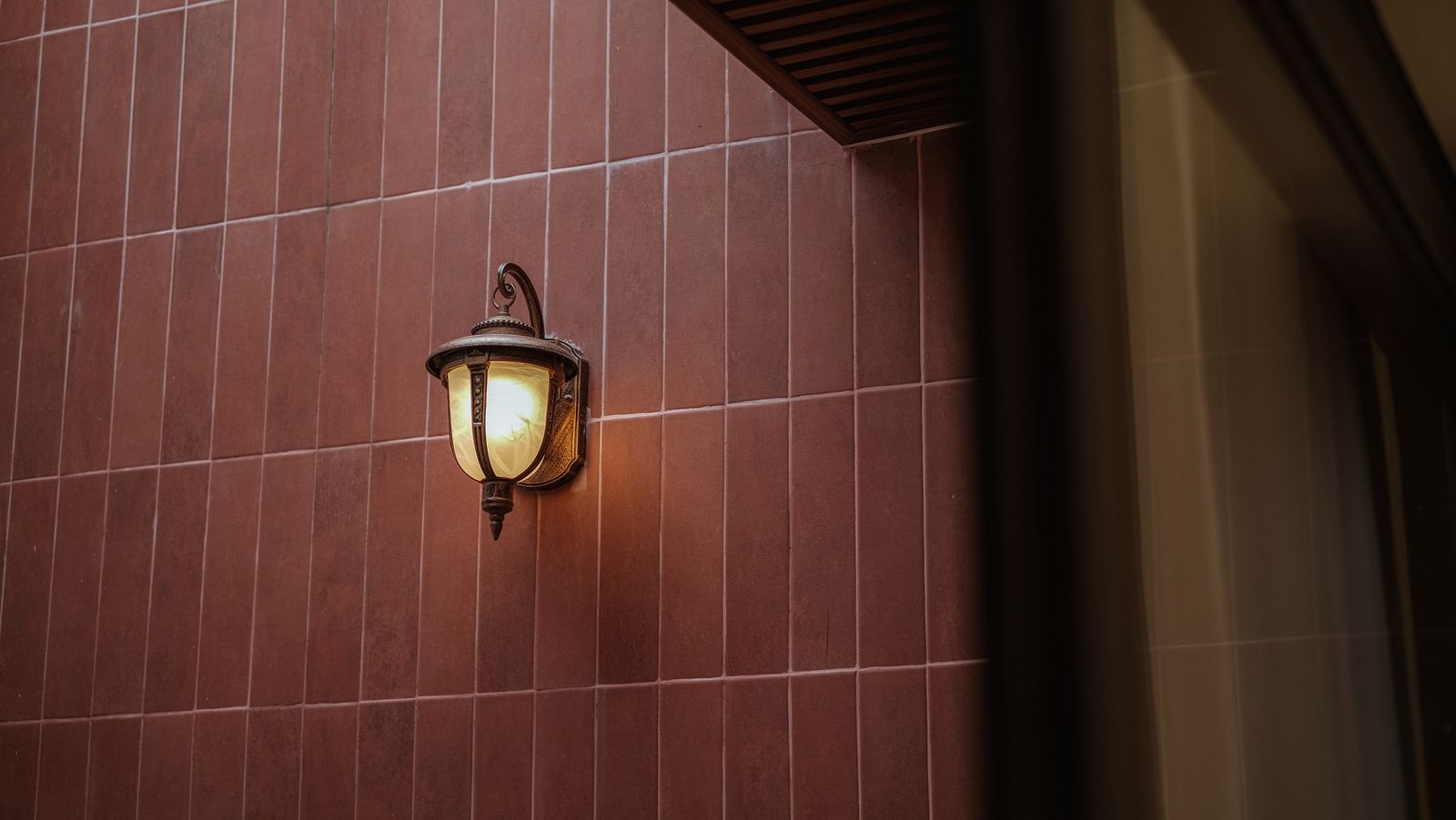
Understanding 3.7V 2200mAh Solar Wall Light Batteries: Runtime, Charging & Efficiency Guide
A 3.7V 2200mAh solar wall light battery is the night pack inside a wireless porch fixture: it fills in 6-8 hours on a poly-silicon panel and runs 8-10 hours when the cell starts full. Solar Outdoor Wall Lights use that pack with dusk-to-dawn control, three lighting modes with a motion sensor, and 200-600 lumens depending on mode. Efficiency is not a mystery percentage. It is whether the panel saw sun, whether the mode left the lamp on all night, and whether the IP65 housing stayed closed.
2200mAh is one night, not a backup generator
Milliamp-hours describe how much charge the cell can hold at 3.7V. For a wall light, that budget is an evening. Runtime of 8-10 hours matches a long summer night if brightness is not pinned at the top of the 200-600 lumen band the whole time. Drain it with false motion triggers and the porch goes dark before breakfast.
The pack does not take house current. Wireless install means the only fill path is the poly-silicon panel. A 4-pack is four independent cells. One shaded fixture does not borrow from the lamp on the sunny gable.
Charging is 6-8 hours of useful sun, not clock time on the wall
Photo by Mehmet Kaya on Pexels
Charge 6-8 hours means a full day of useful sun on a clean poly-silicon face. A panel under a porch roof can sit on the wall for 12 clock hours and still wake up empty. South or west exposure with a clear sky view is the charging stand. East-only walls get a shorter fill and a shorter night.
Dusk-to-dawn automatic performance stops the lamp in daylight so the panel can work. If someone covers the panel to keep the light on during the day, the cell never recovers. Leave the face open.
The guide to how solar outdoor lights work walks the panel-to-cell path this battery depends on.
Mode choice is how efficiency shows up on the porch
Three lighting modes with a motion sensor, including flicker modes, are selected at the power switch. Motion-sensor mode with a 19 ft induction distance spends the 3.7V 2200mAh pack only when someone is in the walk. That is the efficiency setting for a side gate. Flicker or steady dusk-to-dawn glow spends the pack all evening, which is fine on a sitting porch if the day charge was complete.
IP65 and a heatproof housing keep weather out of the cell bay. They do not add capacity. A wet, dirty, or overheated pack still reads as a short night.
E26/E27 is the base type. It is not a second battery. Do not add a high-draw bulb and expect 8-10 hours from the same 2200mAh cell.
What a full charge looks like in practice
After a 6-8 hour fill, the lamp should cover dusk through late evening at mixed brightness. If it dies at 9 p.m. after a sunny day, look at mode, dirt on the panel, and shade before blaming the milliamp-hour number. If it dies after three cloudy days, that is a charge deficit, not a failed voltage rating.
A black frame 4-pack with screws and wall anchors should be mounted so each panel is independent. Clustering four lamps under one dark eave gives four dead cells, not a stronger bank.
How a 3.7V 2200mAh wall-light cell actually gets spent
| Use | What the cell does | Likely night | | --- | --- | --- | | Motion-sensor mode, 19 ft walk | Short bursts | Stretches toward 8-10 hours | | Dusk-to-dawn glow on the porch | Steady draw | 8-10 hours if the day charge was full | | Flicker mode all evening | Steady decorative draw | Plan on a full 6-8 hour charge | | Panel in shade all day | Little or no fill | Short or dark night | | Dirty poly-silicon face | Weak fill | Runtime falls first |
Efficiency is placement, then mode, then weather
The useful efficiency knobs are already on the house: sun on the panel, a clean face, a mode that matches the job, and an IP65 seal that keeps the 3.7V pack dry. Heatproof housing helps the cell live through summer. It does not invent extra milliamp-hours. Four 2200mAh packs in a 4-pack, each doing one wall, is how wireless solar wall lighting stays up without a circuit.
3.7V 2200mAh solar wall light battery checklist
Photo by Gorma Kuma on Pexels
- [ ] Confirm 3.7V 2200mAh, not an unnamed coin cell.
- [ ] Give the poly-silicon panel a 6-8 hour sun window.
- [ ] Match mode to the job: motion for walks, glow for sitting porches.
- [ ] Keep the IP65 housing closed and the panel clean.
- [ ] Treat 8-10 hours as a full-charge night, not a cloudy-week reserve.
- [ ] Mount each lamp in the 4-pack on its own sunlit wall.
Frequently asked questions
Is 2200mAh enough for all night?
With a full 6-8 hour charge, runtime is 8-10 hours. Motion-sensor mode is the safer way to finish a long night.
Does 3.7V mean it can plug into a USB brick?
No. This pack charges from the poly-silicon panel on the fixture. It is not a USB bank.
Why did the light die after a sunny day?
Mode, dirt, or a panel that was not actually in that sun. Check the face and the 19 ft sensor aiming before replacing the cell story.
Do all four lights in a pack share one battery?
No. Each wireless fixture has its own 3.7V 2200mAh pack.
Can a higher-lumen bulb on the E26/E27 base extend runtime?
No. More draw shortens the night. Stay with the fixture as specified and use modes to manage the pack.
Related reading
Panel behavior, overnight runtime, and dusk-to-dawn bill cuts sit next to this battery map.
- overnight brightness from a charged solar wall light
- poly-silicon panels used on outdoor solar wall lights
- solar outdoor wall lights FAQ on charging and modes
What to do next
Pick the wall that actually sees 6-8 hours of sun, mount a wireless Solar Outdoor Wall Light with the poly-silicon face clear, and set motion-sensor mode if the job is a walk rather than a sitting porch. Judge the 3.7V 2200mAh pack after a full charge day, not after a shaded afternoon.
Cover photo by Pew Nguyen on Pexels.